Mooring and constant tension winches for marine and offshore
In short
- A mooring winch holds a vessel to a quay or a structure, and the sea never sits still, so the line is under a load that constantly changes.
- A constant tension winch renders, paying out when the load rises toward the line limit, and recovers, hauling in when the line goes slack, keeping the vessel safely positioned without a person at the controls.
- The render point is set below the line design break force, and safe mooring is governed by guidance such as OCIMF MEG4 and class society rules.
Tying a ship to a quay sounds like a static job, and it is anything but. Tide raises and lowers the vessel, wind pushes it on and off the berth, passing traffic surges it, and offshore the swell never rests. Through all of this the mooring lines have to hold the ship in place without snapping, and the winch on the deck is what makes that possible. Understanding what a mooring winch does, and what constant tension adds, is the difference between a line that holds and one that parts at the worst moment.
What a mooring winch really does
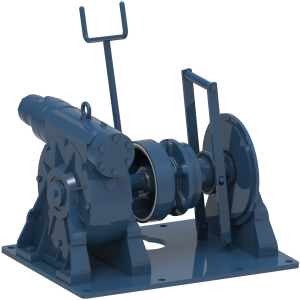
A mooring winch carries the mooring line on its drum and holds the vessel against the forces trying to move it. In its simplest form it hauls the line tight and then sets a brake, and the brake holds the load. That works well at a sheltered, stable berth, but it has a weakness. If the load rises beyond what the brake is set to slip at, either the brake gives way or, worse, the line itself reaches its limit and parts, and a parted mooring line under tension is one of the most dangerous events on any deck. The answer to a changing load is a winch that changes with it.
Constant tension: render and recovery
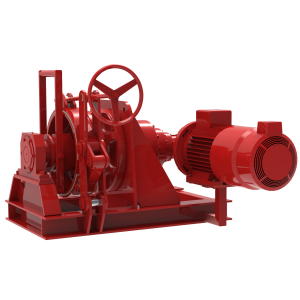
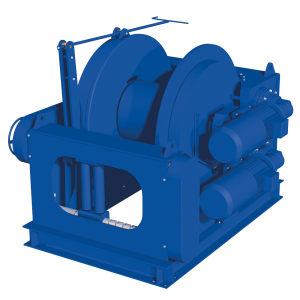
A constant tension winch does what a person at the controls would do, automatically and without rest. It watches the tension in the line and acts on it. When the load rises toward a set point, the winch renders, paying out a little line to relieve the tension and protect the rope, then recovers it when the load eases. When the vessel moves the other way and the line goes slack, the winch hauls in to take up the slack and keep the ship in position. The result is a vessel held steadily as the tide, the wind and the swell work on it, with the load on each line kept within safe limits rather than allowed to spike. Hydraulic drives suit this perfectly, because they meter the line in and out smoothly and absorb shock without complaint.
| Mooring approach | Fixed brake winch | Constant tension winch |
| Holds the line by | A set brake | Actively keeping tension |
| When the load rises | Brake holds, line may part | Winch renders, pays out |
| When the line goes slack | Stays slack | Winch recovers, hauls in |
| Best for | Stable, sheltered berths | Tide, wind, swell, offshore |
Setting the render point: line limits and safe margins
The skill in a constant tension system is where you set the render point. It has to sit comfortably above the normal working tension, so the winch does not render needlessly in everyday conditions, yet well below the line design break force, the load at which the rope would fail, so that the winch always pays out before the line is in danger. Between those two sits the safe working window. Set the point too high and the line carries too much before the winch acts. Set it too low and the winch renders constantly and the vessel wanders. Getting it right means knowing the rope, its minimum breaking load, and the conditions of the berth, which is exactly the kind of detail a serious supplier helps you work through rather than leaving to a default.
Capstan and drum: warping and holding the line
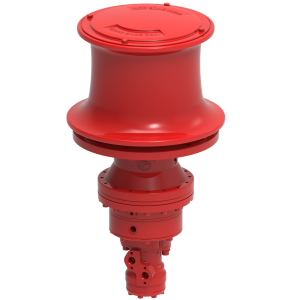
Mooring and warping draw on two related tools. A drum winch stores the full mooring line and holds the vessel, while a capstan, a vertical rotating barrel, is used to warp, heaving on a line turned around it to move or position the ship. Many decks use both, and a capstan is also the everyday workhorse for general line handling around a quay or a structure. Our hydraulic capstan range is built for exactly this marine and offshore warping duty, with the force and the smooth control that line handling on a moving vessel demands, and the robustness to live in salt water and weather without complaint.
Standards and safe mooring
Mooring is a safety critical operation and it is well covered by guidance. The Oil Companies International Marine Forum publishes the Mooring Equipment Guidelines, known as MEG4, which set out how mooring lines, winches and fittings should be specified and managed, including the relationship between the line design break force, the ship design minimum breaking load and the brake and render settings. Classification societies such as DNV, ABS, BV and Lloyd's add their own rules for mooring and station keeping equipment, and offshore floating structures bring further requirements again. Equipment built and documented to this framework is a different thing from a winch chosen on price, and on a quay full of stored energy that difference is measured in safety.
Where mooring and tensioning winches work
The need runs right across the marine and offshore world. Cargo and passenger vessels moor at quays where tide and traffic never stop. Offshore supply vessels and barges work alongside platforms and other ships in open water. Floating structures, from production units to wind installation vessels, hold station against wind and current for weeks at a time. Dredgers and construction barges warp themselves around a work site on their own lines. In every one of these the winch is not a passive anchor but an active partner in keeping the vessel safe, and the calmer and more automatic it can make a restless situation, the better the whole operation runs. Across all of them the lesson is the same: a mooring line under load is a spring full of stored energy, and the winch that manages that energy calmly and automatically is the one that keeps both the vessel and the people on the deck safe. That is why constant tension, once a luxury, is increasingly the standard answer wherever conditions refuse to stay still.
Matching real winches to mooring duty
For warping, mooring and general line handling our hydraulic capstans cover a wide span of pulls, from the compact C 130 H up to the heavier C 305 H and C 306 H for serious deck work. The full marine programme is in our winch catalogue, and the wider case for hydraulic drives on a moving deck is set out in our guide to hydraulic winches for offshore deck work. Tell us the vessel, the line, the berth and the conditions, and we help you size the winch and set its limits safely.
Frequently asked questions
What is a constant tension mooring winch?
A winch that holds a vessel by actively keeping the line tension within set limits. It renders, paying out line when the load rises toward the limit, and recovers, hauling in when the line goes slack, so the vessel stays positioned as tide, wind and swell change.
What does it mean for a winch to render?
Rendering is the winch paying out line when the tension reaches a set point, to relieve the load and protect the rope. The render point is set above normal working tension but well below the line design break force, so the winch always acts before the line is in danger.
Why are mooring winches usually hydraulic?
Because hydraulic drives meter line in and out smoothly, absorb shock loads and tolerate salt water and continuous duty, all of which mooring and constant tension demand. They also share the power pack that often already serves other deck equipment.
What standards cover mooring equipment?
OCIMF MEG4 sets out mooring equipment guidelines including line and brake settings, and classification societies such as DNV, ABS and BV add rules for mooring and station keeping. Offshore floating structures bring further requirements, and equipment is built and documented to suit.