Winch brake holding force: what the second number means
In short
- A winch has two jobs: move the load, and then hold it still. Holding force is the second number, and for lifting it matters more than the pull.
- The holding brake must keep a suspended load in place without power, so a lost supply stops the load instead of dropping it.
- For lifting, on slopes and especially for man riding, you size on the holding force and a fail safe brake, never on the headline pull.
Ask most people what a winch does and they will say it pulls. That is half the answer. A winch that cannot hold what it has moved is only half a machine, and on a lift it is a dangerous one. The force that keeps a load still is the brake holding force, and it is one of the most important numbers on a serious data sheet, yet it is the one a cheap winch is quietest about.
Pull moves the load, the brake holds it
Pulling and holding are different tasks asking different things of a winch. The pull, or the lift, is what the motor does to get the load moving. Holding is what happens when the motor stops, and here the brake takes over. On a pulling job along the ground, friction helps and a stopped load often stays put. The moment the load hangs free, nothing but the brake stands between it and the floor. That is why, for any lift, the brake holding force is the figure that governs safety, not the pull that gets the headline.
What holding force actually means
Holding force is the static load the brake can keep in place with the drive switched off. For a lift it has to exceed the working load with a margin, so the load sits still under full weight and a little more, without creep. A winch can have a generous pull and a weak hold, or the two can be well matched, and only the data sheet tells you which. We state the holding force alongside the pull on every winch, because a buyer choosing a unit to lift needs to read that number first. If a supplier cannot give it to you, treat the winch as a puller, not a lifter, whatever the brochure suggests.
| What matters | Pulling along the ground | Lifting a free load |
| Key number | Line pull | Holding force |
| Brake job | Stops a sliding load | Holds a suspended load |
| On power loss | Load usually stops | Brake must hold or it drops |
| Sizing on | Pull plus a margin | Holding force above the load |
Static and dynamic braking
Two kinds of braking work together on a good winch. The static, or holding, brake clamps the drum when the winch is at rest and keeps the load there indefinitely. The dynamic brake controls the load while it is moving, especially when lowering, so it descends at a measured speed instead of running away. A unit meant only to pull may have little of either, while a lifting winch needs both: a holding brake strong enough for the suspended load, and controlled lowering so the descent is never a free fall. The difference is felt the first time a load has to be eased down rather than dropped.
Fail safe: the brake that holds without power
The most important quality of a lifting brake is that it holds without power. A fail safe, or spring applied, brake is held off by the drive while it runs and clamps automatically the instant power, air or oil is lost. So a tripped breaker, a cut cable or a burst hose stops the load in place rather than releasing it. This is the opposite of a brake that needs power to hold, which would drop the load at the worst possible moment. For lifting, and absolutely for raising people, a fail safe holding brake is not optional, and on personnel equipment it is usually doubled so that no single failure can let go, a point we cover in our guide to man riding winches.
Where holding force decides safety
The cases pile up across industry. A load suspended over a work area must hang without creep for as long as the job takes. A winch on a ramp or an incline holds a load that gravity is always trying to pull back. A hoist on a furnace, a press or a paper line keeps a heavy, often hot, load steady where nobody can stand beneath it. And on personnel work the holding brake is quite literally a lifeline. In every one of these the holding force, not the pull, is the number that keeps people safe, which is why the distinction between pull and lift, set out in our note on line pull versus lifting capacity, runs right through how we size a winch with you.
Looking after the brake over its life
A holding brake is only as good as its condition, so on a lifting winch it earns regular attention. Friction surfaces wear, springs relax over thousands of cycles, and a brake that held perfectly when new can lose grip if it is ignored. Good practice is a periodic brake test, loading the winch to a defined check load and confirming the brake holds it without creep, together with a planned inspection of the linings, the springs and the release mechanism. On equipment that lifts people this is not a suggestion but a duty, with thorough examination at set intervals by a competent person.
Heat and duty cycle play a part too. A dynamic brake that controls a lot of lowering does real work and sheds real heat, and a winch run far beyond its rated duty can fade a brake just as it fades a motor. Sizing the winch honestly for the duty, rather than for the single heaviest pull, keeps the brake within its comfortable range and its life long. When a brake does need service, the parts and the procedure should be known and available, which is another quiet advantage of buying from a serious source rather than an anonymous import. We supply the documentation, the test figures and the spares behind every winch, so the brake that keeps your load safe stays that way for years. A brake you can trust is the quiet difference between a winch that only pulls and one you can genuinely lift with.
Choosing a winch by how it holds
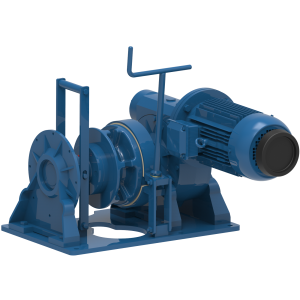
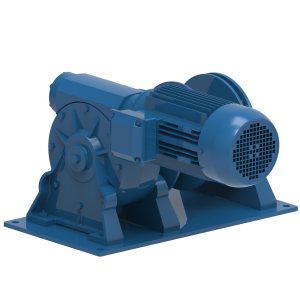
If your duty is a lift, start from the holding force and the brake design, then check the pull. Our industrial electric range carries fail safe holding brakes sized for the job, from compact units such as the MCW 1200 to larger frames like the FD 301 E, and for raising people the dedicated MR 000E adds the redundancy that personnel lifting demands. The full programme is in our winch catalogue, and the brake behaviour it has to meet is set out in EN 14492-1.
Frequently asked questions
What is the difference between line pull and holding force?
Line pull is the force the motor uses to move the load. Holding force is the static load the brake keeps in place with the drive off. For lifting, the holding force is the safety number, because it is all that stands between a suspended load and the floor.
Will a winch hold the load if the power fails?
Only if it has a fail safe holding brake, which clamps automatically when power, air or oil is lost. A brake that needs power to hold would release the load on a failure, so for any lift a spring applied, fail safe brake is essential.
How much holding force do I need for lifting?
The holding force must exceed the working load with a margin so the load sits still without creep. Size on the holding figure, not the pull, and for personnel lifting use equipment built to a higher safety factor with a redundant brake.
Do pulling winches have a holding brake?
Often only a basic one, because a load dragged along the ground tends to stop when the motor does. That is why a pulling winch must never be used to hold or lift a free load, where a proper fail safe holding brake is required.